“An Immense World” (2022)
“I Contain Multitudes” (2017)
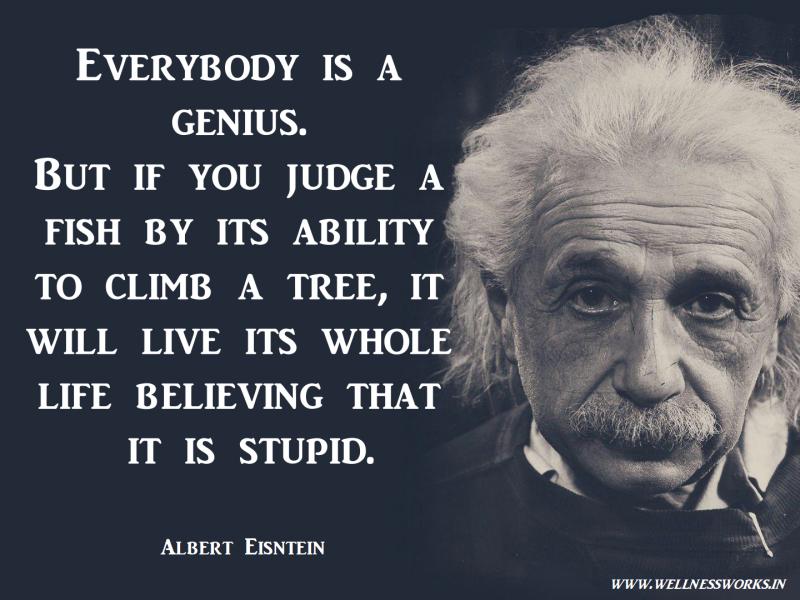
CREATIVE DIFFERENCES

Are Music Companies Hiring Enough People Who Think Differently?
Artists from Florence Welch to Billie Eilish have opened up about their neurodiversity. Now the industry is starting to respond
The American Psychiatric Association and the National Institute of Mental Health have struggled with how to address a DSM that lacks scientific “validity.”In the meantime, some academics around the world are acknowledging that we don’t know everything, and what we do know is different than the DSM.
Those academics have moved to publish Textbooks and Manuals — that is more helpful in the short term than trying to wait until we have completed NIMH’s Research Domain Criteria Initiative — which is important — BUT is NOT addressing immediate needs to replace the DSM.



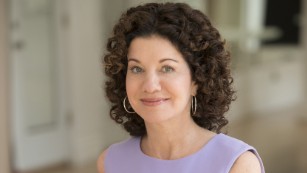
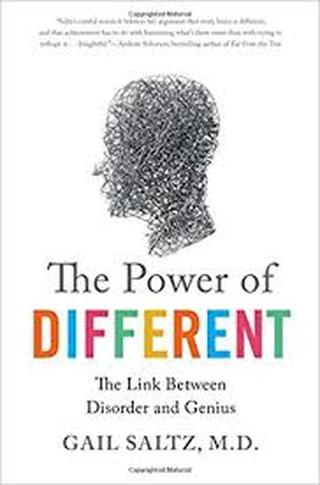
CNN – EXCERPTOur default, Saltz says, as a society and even for parents whose child has learning difficulties or mental health disorders, is to focus on the weakness.
“We’re very invested in fixing, and we tend to be focused on the negative, whatever the negative is. Make it better so everything is good.
It’s an understandable means of reacting, but it becomes so embedded, and it’s not really the best path.”
http://www.cnn.com/2017/03/09/health/learning-disabilities-mental-health-genius-parenting/index.html
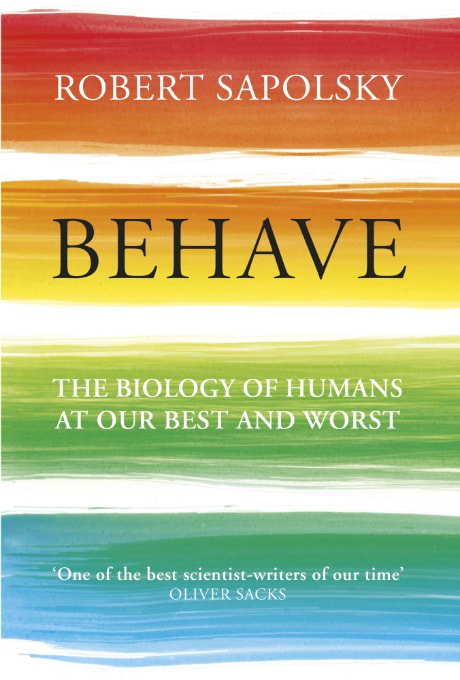
DR. ROBERT SAPOLSKY IS A PROFESSOR OF BIOLOGY, NEUROLOGY AND NEUROLOGICAL SCIENCES, AND NEUROSURGERY @ STANFORD UNIVERSITY: “You are never really going to understand what is going on if you get it into your head that you’re going to be able to explain everything with this is–
- the part of the brain
- the childhood experience
- the hormone
- the gene
- or the evolutionary mechanism
—That explains everything.
“It doesn’t work that way. Instead any behavior is the result of biology that occurred a second ago, hours ago, days ago — a million years ago.”
. . . .“O000h it’s complicated. Well, that’s very useful.
“How ’bout, ‘OOOh it’s complicated and you better be really careful and really cautious before you think you understand the causes of a behavior, especially if it’s a behavior you judge harshly.’
Prof. Robert Sapolsky Stanford
“This well-researched and highly critical examination of the state of our mental health system by the industry’s most relentless critic presents a new and controversial explanation as to why–in spite of spending $147 billion annually–140,000 seriously mentally ill are homeless, 390,000 are incarcerated, and even educated, tenacious, and caring people can’t get treatment for their mentally ill loved ones.
”DJ Jaffe blames the mental health industry and the government for shunning the 10 million adults who are the most seriously mentally ill–mainly those who suffer from schizophrenia and severe bipolar disorder–and, instead, working to improve “mental wellness” in 43 million others, many of whom are barely symptomatic.
“Insane Consequences proposes smart, compassionate, affordable, and sweeping reforms designed to send the most seriously ill to the head of the line for services rather than to jails, shelters, prisons, and morgues. It lays out a road map to spend less on mental “health” and more on mental “illness”–replace mission creep with mission control and return the mental health system to a focus on the most seriously ill. It is not money that is lacking; it’s leadership.

Work is one of the most important things in human life. In modern society most adults spend more time @ work than with their families.All human beings have abilities and deficits, but the more unexpected those abilities and deficits are — the more difficult it is for the workplace to accommodate them.
Invisible “disabilities” or “differences” present some of the most difficult challenges for workplaces and that difficulty is often excruciatingly painful for individuals, not to mention financially disastrous.
Like a lot of things, checklists and a systematic approach really can help.
Luckily, the federally funded Job Accommodation Network has done a lot of work in this area.
askjan.org —-Orchid